
You’ve got your suit style nailed; well done. But what do you wear on casual Fridays, or when you receive a conference invitation with the ambiguous dress code which reads; “business casual”? What exactly is business casual for men, and how do you pull it off without looking like a strange cross between Mark Zuckerberg and Harvey Specter?
Sitting somewhere between a suit and tie, or jeans and a t-shirt, casual business attire has the ability to confuse even the best-dressed chaps. It’s different for every event and in every workplace, and understanding the subtle differences between “business” and “business casual” can be confusing to say the least. The definition changes between industries, offices and even events.
This guide breaks down what business casual for men means, what to wear, what to avoid, and how to style business casual outfits with confidence.

What Is Business Casual?
Business casual for men is a professional dress code that removes the full suit and tie, but still maintains a polished, corporate appearance.
In most Australian workplaces, business casual attire for men typically includes:
-
A blazer or sports jacket (optional but recommended)
-
Dress trousers or chinos
-
A collared dress shirt
-
Leather dress shoes, loafers or clean streamlined leather sneakers (depending on your industry)
It is smarter than smart casual, but less formal than traditional business attire.
The Origins Of Business Casual
Business casual was originally born in Silicon Valley in the 80s. It began with casual Fridays — an inclusive day where hierarchy mattered less and performance mattered more.
As industries evolved, especially in tech and creative sectors, the strict daily suit became less essential. Work was measured by output, not optics. Over time, business casual became a standard workplace dress code, not just a Friday experiment.
Today, business casual dress codes vary significantly across Australia, especially between corporate firms, start-ups and creative industries.
What Are You Dressing For?
When understanding what business casual means, context is everything. First of all, you’ll need to consider what you’re dressing for. Common sense should prevail here.
Ask yourself:
-
Is this a normal office day?
-
Am I attending a client meeting?
-
A work conference?
-
Do I have a corporate lunch on?
-
Am I giving a presentation?
If your company typically requires a 3-piece suit Monday to Thursday, your business casual outfit will still lean structured and formal.
If you’re in a creative or start-up environment, the interpretation will likely be more relaxed.
Business casual is not weekend casual. That’s where most men get it wrong.
Take cues from those around you. And by that we mean upper management, not Jimmy, the office junior, who wears shorts and sneakers every day.
Business Casual Attire In The Corporate World
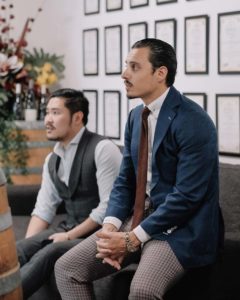
If you work in a law firm, bank, or are otherwise working in the corporate world where you would normally wear a suit and tie, business casual attire will be more formal, generally consisting of a blazer or sports coat, trousers and a long-sleeved button-down shirt.
A safe formula:
-
Navy or charcoal blazer
-
Tailored trousers or elevated chinos
-
White, blue or fine-striped business shirt
-
Optional tie (depending on occasion)
-
Oxfords, Derbies, Monk Straps or leather loafers
In terms of your shirt, if the norm is to wear blue, white, fine striped or other plainer shirt styles, follow the same pattern when wearing business casual attire, unless you are going to an event like the races. Neckwear is generally optional, depending on the occasion. Shoes are a whole other topic, but generally, aim for oxfords, derby-style shoes or monk strap shoes in brown, black, burgundy or oxblood. Loafers can be worn for the races, or other more casual work events.
A more relaxed pant like chinos or corduroy pants are appropriate, but if you do choose to wear them, opt for a dressier blazer in a luxury cut or fabric to elevate your look. Similarly, if you’re wearing a blazer in a loud colour, pair it back with more neutral bottoms.
Business Casual in Creative, Tech or Start-Up Workplaces
If you’re working in a more creative industry, a start-up or other creative workplace where more casual and creative dressing is embraced, you can have a little more fun with business casual attire and show your personality.
You might wear:
-
Patterned shirts
-
Textured or coloured blazers
-
Tailored chinos
-
Minimal leather sneakers
-
Smart boots
However, polish is non-negotiable.
Even in creative industries, your business casual outfit should look intentional, tailored and professional.
To keep things classy, no matter what you wear, ensure that it always looks polished. Iron your shirts, tuck them in, ensure your pants are lint-free. This can be a game changer and can mean you’ll be forgiven for wearing a less casual look.
If in doubt, add a blazer. A tailored jacket instantly elevates even the simplest outfit. The combination of sleek material and strong, powerful shoulders in the tailored blazer commands attention. This makes for an instantly sharp look, which should be your go-to every time you are leading a meeting or giving a presentation.
Perhaps you don’t normally wear a suit and tie at all, and business casual is the norm. If you’re just starting out, better to be the one wearing a suit or sports jacket and dress pants than the one wearing jeans and sneakers when you’re dragged in to that client meeting they forgot to tell you about.

What Not to Wear for Business Casual
Here’s what typically doesn’t qualify as business casual:
-
Graphic t-shirts
-
Ripped or distressed jeans
-
Gym sneakers
-
Hoodies
-
Shorts
-
Thongs (this is Australia, but still no)
Common sense should prevail when it comes to casual business attire. Consider your work day; from a regular day in the office to client meetings or even out-of-work events.
What does your business casual style look like? We’ve got a range of sports jackets and trouser combinations and can assist when it comes to your business casual style dilemmas. Contact us today for style advice, or click here to find out about our process.